Lack of Intimacy After Having a Baby: What's Really Happening and What Genuinely Helps
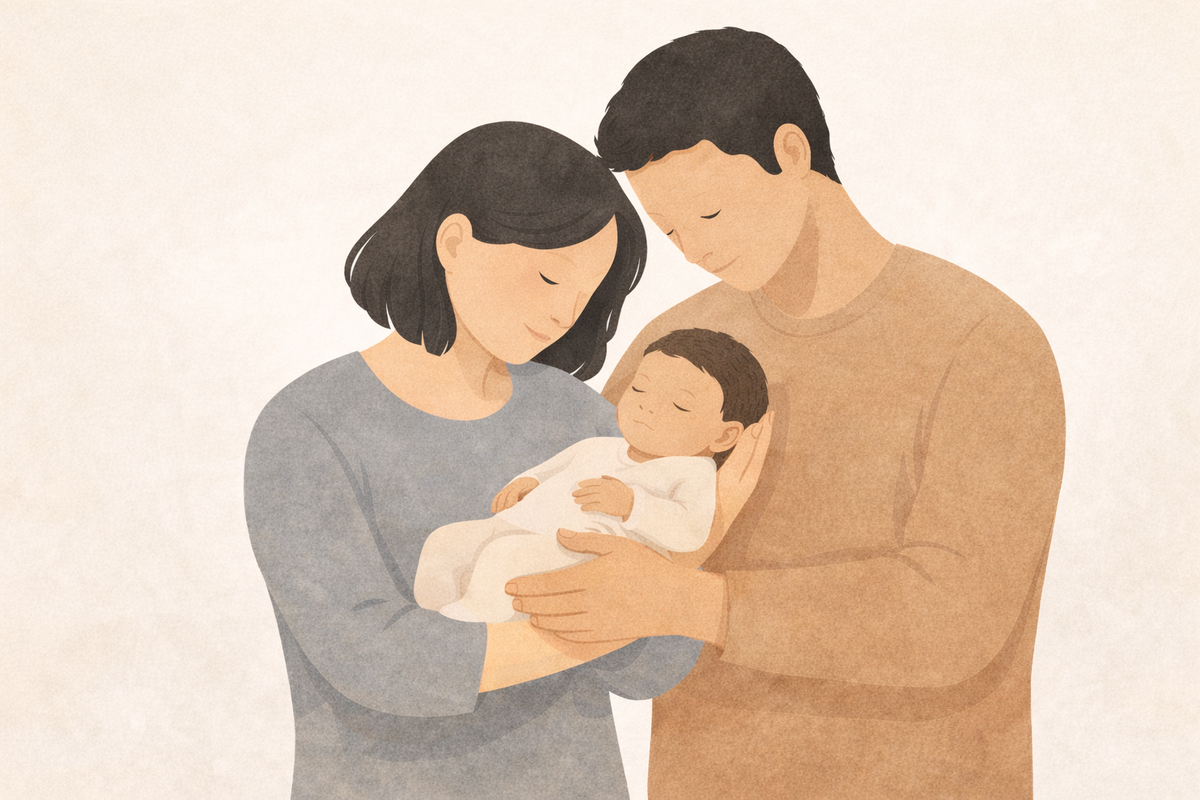
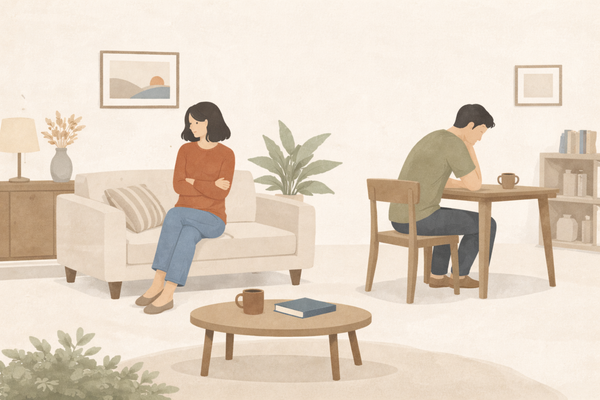
Something has changed between you, and you both know it. You are more tired than you have ever been. You love this baby with a ferocity that surprises you. And you are, in some way that is hard to name, further from your partner than you have been in years.
Maybe one of you has stopped initiating physical closeness. Maybe both of you have. Maybe you still reach for each other in small ways, but something about the connection feels different. Quieter. More effortful. And underneath the exhaustion and the logistics and the relentless demands of new parenthood, a question you haven't quite known how to raise: is this normal? Will it come back? And if you are the one who feels more distant, a quieter question still: what is wrong with me?
Nothing is wrong with you. The lack of intimacy after having a baby that most couples experience is one of the most well-documented and least honestly discussed phenomena in relationship research. It is not a sign that love has faded. It is not evidence of incompatibility. And it is not, in most cases, a relationship problem at all. It is a nervous system problem.
Is lack of intimacy after having a baby normal?
For a broader understanding of why intimacy fades in relationships and what genuinely helps, see our guide on lack of intimacy in a relationship.
What this article covers
- Is lack of intimacy after having a baby normal?
- Why does intimacy fade so suddenly after a baby arrives?
- What is the nervous system doing to desire after birth?
- What does lack of intimacy after a baby feel like for each partner?
- Why does the partner often feel rejected?
- How do you rebuild closeness when you are both running on empty?
- When does postpartum lack of intimacy become a longer-term problem?
- A closing though
- Frequently Asked Questions (FAQ)
Is lack of intimacy after having a baby normal?
Lack of intimacy after having a baby is so common that researchers describe it as one of the most reliable predictors of postpartum relationship change. It is more persistent than most couples are prepared for. Research consistently finds that relationship satisfaction declines significantly in the first year after a baby arrives, with intimacy, both physical and emotional, among the first casualties. One large-scale study found that two-thirds of couples reported a significant drop in relationship quality in the first three years of parenthood.
This is not a reflection of how much partners love each other. Many couples who experience significant lack of intimacy after having a child still care deeply about each other. What changes is not the love. It is the conditions. The availability, the energy, the sense of safety and ease that intimacy requires. All of these are systematically disrupted by the arrival of a new baby, in ways that are physiological, not personal.
What makes this so difficult is that most couples expect the adjustment to be temporary and relatively straightforward. They expect to be tired. They do not expect to feel like strangers. They do not expect the person they are closest to in the world to feel unreachable. And when that distance appears, both partners tend to interpret it through the lens of the relationship rather than through the lens of biology.
That misinterpretation is where most of the difficulty comes from.
Why does intimacy fade so suddenly after a baby arrives?
Understanding why lack of intimacy after having a baby happens so suddenly requires looking at what intimacy actually needs in order to exist. The short answer is: because everything that intimacy requires is, temporarily, directed elsewhere.
Intimacy is not just a feeling. It is a state that the body and mind move into when certain conditions are met. Physical safety, emotional ease, some degree of freedom from immediate threat or demand. In the early months of parenthood, almost none of those conditions are reliably available.
Postpartum depletion
Postpartum depletion is the term used by integrative medicine doctor Oscar Serrallach to describe the deep physical and neurological exhaustion that follows birth and early parenting. It encompasses not just tiredness but the genuine depletion of nutritional, hormonal, and neurological resources. Those can persist for months or years after birth. Serrallach argues that this depletion is systemic and structural. Not simply a matter of needing more sleep. It directly affects mood, libido, emotional availability, and the capacity for connection.
Physical depletion of this depth does not just affect energy. It affects the whole system that makes closeness possible. Sleep deprivation, in particular, has measurable effects on empathy, emotional regulation, and sexual desire. A partner who has been woken multiple times a night for months is not choosing distance. Their nervous system is redirecting every available resource toward keeping a small human alive.
Hormonal disruption
For the person who gave birth, hormonal changes after delivery are profound. Oestrogen and progesterone fall sharply. Prolactin, the hormone that supports breastfeeding, suppresses oestrogen further and directly reduces sexual desire. Oxytocin, the bonding hormone, is now primarily directed toward the infant. This hormonal landscape is not a malfunction. It is the body doing exactly what it evolved to do: prioritise infant survival above all else.
The result, for many new mothers, is a loss of interest in physical intimacy that is not psychological but physiological. It is the body saying: the attachment resources that were previously available for your partner are now needed elsewhere. This is temporary. But it does not feel temporary when you are inside it.
The relationship becomes primarily functional
On top of the physical changes, the relationship itself shifts its primary mode. Partners who once related to each other as lovers, companions, and emotionally intimate equals begin to relate almost entirely as co-managers of an infant. The conversations are practical. The physical contact is often logistics-adjacent. The space that used to exist for just being together is filled, completely, with everything that needs doing.
This functional shift is one of the most common dynamics behind the feeling that a relationship starts to feel like roommates. In the postpartum period it happens not through drift but through necessity. Our article why your relationship feels like roommates explores this dynamic in detail and is worth reading.
What is the nervous system doing to desire after birth?
The most important reframe for couples navigating lack of intimacy after having a child is physiological rather than psychological. This is the section that tends to change everything for the couples who read it. Because it shifts the frame from personal to physiological, and from rejection to biology.
Neuroscientist Stephen Porges's polyvagal theory describes how the autonomic nervous system continuously scans for signals of safety or threat. When the body is in survival mode, mobilised by fight-or-flight or depleted into shutdown, it cannot access the state that intimacy requires. Intimacy needs what Porges calls the ventral vagal state: a felt sense of safety and social engagement. In early parenthood, the primary caregiver's nervous system is almost continuously in a mobilised or depleted state. This is not a choice. It is the body's automatic response to relentless demand.
Deb Dana, a therapist who has applied Porges's work to everyday relationships, describes how the body begins to associate certain contexts with effort or threat over time. When physical closeness has repeatedly occurred in a context of depletion and demand, when a touch arrives and the body's first response is exhaustion rather than ease, the nervous system begins to register closeness itself as another demand. This is not a response to the partner. It is a response to the conditions.
For the person experiencing this, it can feel like a loss of desire, a loss of interest, even a loss of love. It is none of those things. It is the nervous system protecting a depleted body by redirecting away from any experience that requires energy or openness. Recognising this does not immediately change the physical reality. But it almost always changes the emotional one.
Responsive desire is Emily Nagoski's term for desire that emerges in response to connection, ease, and safety rather than arriving spontaneously. Nagoski's research shows that responsive desire is how most people in established relationships actually experience sexual interest. And that it requires specific conditions to emerge. In the postpartum period, most of those conditions, physical ease, mental space, absence of demand, sense of safety, are systematically absent. The lack of desire is therefore not evidence that desire has gone. It is evidence that the conditions for desire are not currently in place. This distinction is one of the most useful reframes available to new parents navigating lack of intimacy.
Understanding responsive desire changes the question from 'why don't I want this anymore' to 'what would need to be true for my body to have space for this.' That is a very different question, and it tends to be a considerably more answerable one.
A note before you begin reflections
There are a few short reflection exercises in this article. If you are the partner who tends to notice these things first, who reads the articles, who carries the awareness of the relationship, they are not more work for you to do alone. They are most useful when they eventually belong to both of you.
If your partner is not ready to hear this yet, or responds in a way that closes things down rather than opens them, that is not a failure. Sometimes the first time you try is the practice, not the conversation itself.
✦ Pause and Reflect #1: what your body needs
For yourself: Think about what your body needs most right now. Not what the relationship needs, not what your partner needs. What would your nervous system need in order to feel genuinely at ease? It might be sleep. It might be silence. It might be ten minutes of existing without being needed by anyone.
To bring to your partner (when the time feels right): "I've been reading about what happens to desire when you're depleted. It helped me understand what's been happening for me. Can I share it with you? I think it explains something I haven't been able to say clearly."
What does lack of intimacy after a baby feel like for each partner?
One of the reasons the postpartum intimacy gap is so damaging to relationships is that it tends to be experienced very differently by each partner. Each is going through something real. Each is mostly invisible to the other. A fair amount of the difficulty can ease once both partners genuinely see what the other is carrying, which is the purpose of this section.
A note on language: the sections below describe the experience of the primary caregiver and the non-primary caregiver. For many couples, this aligns with who gave birth and who did not, but not always. Adoptive parents, same-sex couples, and couples where caregiving has been shared or reversed will find that the dynamics still apply; the labels simply describe who is doing the majority of the hands-on infant care, whatever the family shape.*
For the primary caregiver
For the person doing most of the physical caregiving, the experience is often one of being touched out. Of having given so much physical contact to the baby throughout the day that the prospect of any further physical closeness, however tender, registers as another demand on a body that has nothing left. This is not rejection. It is saturation.
Alongside this, many primary caregivers carry a quiet guilt about the distance. They know their partner needs connection. They want to want it. The gap between what they know they should feel and what they actually feel creates its own kind of loneliness. And that loneliness, layered on top of the physical exhaustion, is often invisible to the partner who is experiencing the distance from the outside.
Identity also shifts in ways that are hard to name. The person who was a partner, a lover, an individual before the baby is now also a parent. The parts of the self that lived in the relationship, that were curious and present and physically alive within it, can feel temporarily inaccessible. Not gone. Somewhere underneath everything that is currently required.
For the non-primary caregiver
For the partner who is not doing the primary caregiving, the experience is typically one of watching someone they love become increasingly unavailable, without entirely understanding why. They may be making every effort to help, to give their partner space, to not add pressure. And yet the distance remains. Sometimes grows.
The most common and most painful interpretation of this, for the partner on the outside, is that the distance is personal. That their partner has lost interest in them specifically. That the arrival of the baby has somehow replaced them in their partner's emotional world. This interpretation is almost always incorrect. But it is very hard to live with, and it tends to produce exactly the dynamic that makes things harder.
Touch hunger is the term used by researcher Tiffany Field, who founded the Touch Research Institute at the University of Miami, to describe the physiological and emotional consequences of sustained reduction in affectionate physical contact. For the partner who is not doing primary caregiving, touch hunger can develop quietly and painfully in the postpartum period, not because their partner is withholding touch, but because their partner's touch quota is entirely absorbed by the baby. Naming this can be useful. It is not neediness. It is a real physiological experience, and it deserves to be acknowledged without shame.
The longer-term effects of this kind of sustained distance, including what it does to self-worth and to the impulse to reach for connection at all, are covered in our article on the effects of lack of intimacy. It is worth reading if the distance has been building for more than a few months.
Why does the partner often feel rejected, even when rejection is not the intention?
This section matters because the partner's experience of rejection, if it goes unaddressed, tends to generate a dynamic that makes the primary caregiver's recovery harder rather than easier.
What often develops is a specific pattern described by Sue Johnson as the pursue-withdraw cycle. One partner, feeling the distance, reaches for connection with increasing intensity. The other, already depleted, withdraws under the weight of that pressure. Both responses make complete sense individually. Together they create a loop in which the pursuit confirms to the depleted partner that closeness means more demand, and the withdrawal confirms to the pursuing partner that they are not wanted.
In the postpartum context, this cycle has a specific quality. The pursuing partner is usually driven by genuine fear that something important is slipping away, that the relationship they relied on before is no longer available to them. The withdrawing partner is usually driven by depletion and the body's automatic response to any additional demand. Neither is wrong. Both are responding to the same underlying fear of disconnection, from opposite directions.
What this means is simple but takes time to absorb, and it is worth saying to each partner directly.
For the partner experiencing the rejection: your partner's body is not rejecting you. It is protecting itself. The withdrawal is not a comment on your desirability or your value. It is a physiological response to a body operating at or beyond its limits. That does not make it easier to live with. But it changes what it means.
For the primary caregiver: your partner's pursuit is not a lack of understanding. It is fear. Fear that something important is slipping, that they are losing their place in your world, that the relationship they relied on before is no longer available to them. That fear deserves to be named, even when naming it is the last thing your depleted nervous system wants to do.
For a fuller exploration of how this cycle works, what each partner is actually experiencing, and what begins to loosen its grip, see our article on the effects of lack of intimacy, which treats the pursue-withdraw cycle in more depth.
✦ Pause and Reflect #2: which way you move
For yourself: Which role do you tend to find yourself in right now: the one who reaches and is met with distance, or the one who pulls back when reaching arrives? Neither is the wrong response. Both are driven by the same fear underneath.
To bring to your partner (when the time feels right): "I don't think either of us is doing this wrong. I think we're both scared of the same thing from opposite sides. Can I tell you what it looks like from mine?"
How do you rebuild closeness when you are both running on empty?
The most important thing to understand about rebuilding intimacy after having a baby is that the goal, at least in the early months, is not to restore the intimacy you had before. It is to maintain enough connection to get through this period without the distance becoming the new normal.
That is a different task. It requires less effort and more orientation.
Start with emotional contact, not physical
In the postpartum period, the route back to physical intimacy almost always runs through emotional connection first. Not because physical intimacy is less important, but because the nervous system needs to register safety and ease before it can open toward anything more. And emotional contact, done gently, is less likely to register as demand.
What does this look like practically? Not a conversation about how things have been. Something smaller. A moment of genuine eye contact. A specific question that has nothing to do with the baby. "What did you think about today, that wasn't the feeding schedule?" "Is there something on your mind that you haven't had space to say?" These are small acts of attention, and in the postpartum period, they accumulate in ways that matter more than grand gestures.
An emotional bid is any small attempt one partner makes to reach for the other: a comment, a look, a question that says, quietly, I am still here and I am still interested in you. John Gottman's research found that couples who reliably turned toward each other's small bids for connection maintained relational closeness even under significant pressure. In the postpartum period, when energy for anything extended is genuinely limited, small consistent bids matter more than any larger gesture. The response does not need to be elaborate. A moment of genuine attention is enough.
Lower the stakes on physical closeness
When physical intimacy has been absent or pressured for a while, reintroducing it tends to work better through non-agenda touch than through direct attempts to restore sexual closeness. A hand on a shoulder that does not need to go anywhere. A longer hug without expectation. Sitting close while watching something, without any agenda attached.
The point is to give the nervous system repeated experiences of physical closeness that do not arrive with demand. Over time, this begins to rebuild the body's association of touch with ease rather than effort. Desire tends to follow from that ease, slowly and on its own terms, rather than in response to direct effort.
Name what is happening
This is one of the most consistent findings from relationship research. Couples who name the lack of intimacy after having a baby as a shared challenge, rather than adapting to it in silence, consistently fare better in research on the postpartum period.
The conversation does not need to be long or formal. It needs to be honest. "I know we've been distant. I don't think it's because of how we feel about each other. I think it's because we're both completely depleted. I don't want us to get used to this." That is usually enough to shift the emotional climate, even when nothing about the practical circumstances changes.
What matters is that the distance is named out loud together, rather than carried separately in silence. Much of what makes postpartum intimacy loss feel frightening is the sense that each partner might be experiencing something different, or worse, something more serious than the other realises. Naming it reduces the fear by making it shared information rather than private worry.
✦ Pause and Reflect #3: a permission, not a practice
The other reflection exercises in this article have asked you to notice something. This one asks you for something different: to give yourself, or each other, a small piece of explicit permission. Read whichever of these lands, and let it be said to you:
It is allowed to not want physical closeness right now. Not as a failure. As a signal from a body that is doing something extraordinary and has nothing left for anything else.
It is allowed to miss your partner, and to feel confused by the distance, and to still not know how to close it. Not all confusion is a problem. Some of it is just what this phase feels like.
It is allowed to not have a plan for what happens next. Survival mode is not the time for planning. It is the time for getting through.
To bring to your partner:
If any of those lands, you could pass it along: "I read something today that gave me permission to not know what to do about this yet. I wanted to give you the same permission. This is not the season for fixing us. It is the season for getting through, together."
When does postpartum lack of intimacy become a longer-term problem?
For most couples, the intimacy gap that follows a baby's arrival narrows naturally as sleep improves, hormones stabilise, and the relentless demands of early infancy begin to ease. Most research suggests that couples who maintain some degree of emotional connection through the first year, even if physical intimacy is significantly reduced, tend to return to something close to their previous level of closeness within two to three years.
But there are patterns that suggest the distance may not resolve on its own. These are worth recognising early.
The first is when the functional dynamic, the relationship-as-logistics that is almost universal in early parenthood, has become so entrenched that it persists long after the baby's immediate demands have eased. When conversations remain primarily practical, when neither partner is initiating emotional contact, and when both have quietly adapted to a lower level of closeness as the normal, this tends not to self-correct.
The second is when the pursue-withdraw pattern has calcified. When the cycle has been running long enough that the pursuing partner has quietly stopped reaching, and the withdrawing partner has stopped noticing the absence, the pattern can persist even after the physical causes have resolved. At this stage, the surface of the relationship often looks calm. Underneath, both partners have adapted to distance as the normal state of things.
The third is when postpartum depression or anxiety is present. Both conditions directly affect intimacy, both for the person experiencing them and for their partner, and both are significantly more common than most new parents realise. They deserve specific, professional support rather than relationship-level intervention alone.
If the distance has become the settled texture of the relationship rather than a response to the specific demands of early parenthood, our article on emotional intimacy vs physical intimacy can help to identify which dimension has been most affected and what to attend to first.
Couples therapy, particularly Emotionally Focused Therapy, is well-suited to the postpartum intimacy gap. It works on the underlying attachment fears that drive the pursue-withdraw dynamic, and it gives both partners a language and a structure for the conversations that have been accumulating and going unsaid. Many couples who come to therapy in the first year or two after a baby find that even a short course of sessions creates a shift that self-directed effort had not been able to produce.
A closing thought
The lack of intimacy after having a child that most couples experience is one of the most universal and least discussed experiences in long-term partnership. It is not a sign that something is wrong with your relationship. It is not a sign that something is wrong with you. It is a sign that your body and your partner's body are doing exactly what they are designed to do in response to one of the most demanding experiences that humans encounter.
The distance does not mean the closeness is gone. It means it is currently underneath everything that is required of you. And what tends to bring it back is not effort, not scheduling, not pressure. It is the slow return of ease. The small moments of genuine attention. The willingness to name what is happening rather than adapt to it in silence.
You have not lost each other. You are just both, for now, in survival mode. And survival mode, it turns out, is temporary. That, ultimately, is what the lack of intimacy after having a baby most needs: not a fix, but a reframe.
What to remember
#2 The distance does not mean the closeness is gone. It means it is currently underneath everything that is required of you.
#3 Survival mode is not the season for fixing the relationship. It is the season for getting through it together.
#4 What tends to bring closeness back is not effort. It is the slow return of ease, the small moments of genuine attention, and the willingness to name what is happening rather than adapt to it in silence.
Where to go next
A few other articles in this series may be useful alongside this one, depending on what you are experiencing.
If the distance has been building for longer than a year and you are noticing the effects on yourself, on your confidence, your sense of identity, your willingness to reach for your partner at all, our article on the effects of lack of intimacy goes deeper into what sustained distance does to each partner individually.
If the most acute phase has passed but the relationship has settled into a functional mode that does not quite feel like a partnership, our article on why your relationship feels like roommates explores that dynamic.
If you are beginning to think about how to actively rebuild closeness, our article on how to rebuild intimacy in a relationship looks at what works and what tends to make things harder.
Frequently asked questions (FAQ)
Is lack of intimacy after having a baby normal?
Yes, and it is much more common than most couples are told. Research consistently finds that relationship satisfaction, including both physical and emotional intimacy, declines significantly in the first year of parenthood. This is driven by physiological, hormonal, and practical factors rather than by how partners feel about each other. Most couples who experience lack of intimacy after having a baby still care deeply about each other. What changes is not the love but the conditions that intimacy requires.
How long does lack of intimacy last after having a baby?
For most couples, the most acute phase, involving significant loss of physical desire and emotional availability, lasts for three to twelve months. A gradual return to closer pre-baby levels of intimacy typically takes two to three years, particularly when the couple maintains some degree of emotional connection through the first year. Couples who adapt to the distance without naming it tend to take longer to return to closeness, and sometimes do not without support.
Why do I have no interest in intimacy after having a baby?
The loss of interest in intimacy after having a baby is primarily physiological rather than psychological. Hormonal changes, especially the drop in oestrogen and rise in prolactin associated with breastfeeding, directly suppress sexual desire. Sleep deprivation depletes the neurological resources that desire requires. And the autonomic nervous system, continuously managing the demands of infant care, has limited capacity for the ease and openness that intimacy needs. The desire has not gone. The conditions for it are temporarily unavailable.
How do I tell my partner I don't want intimacy after having a baby?
The most useful framing is physiological rather than personal. Something like: "My body is genuinely depleted right now, and it's not responding to closeness the way it used to. This is not about how I feel about you. It's about what's happening in my nervous system." Naming the lack of intimacy after having a baby as a shared challenge rather than a personal withdrawal tends to reduce the pursuing partner's fear and ease the pressure that makes the primary caregiver's recovery slower.
When should we seek help for lack of intimacy after having a baby?
Consider seeking support when the lack of intimacy after having a baby has persisted beyond the first year with no sign of improving, when the pursue-withdraw pattern has become entrenched and self-reinforcing, when postpartum depression or anxiety may be contributing, or when both partners have quietly adapted to the distance and neither is initiating emotional contact. Couples therapy, particularly Emotionally Focused Therapy, has a strong evidence base for exactly this kind of relational drift.
About the research
This article draws on work by Sue Johnson, John Gottman, Emily Nagoski, Stephen Porges, Deb Dana, Oscar Serrallach, Tiffany Field, Esther Perel, David Schnarch, Harriet Lerner, Brené Brown, and Alexandra Solomon.
Written by the BetweenUs editorial team. We write about long-term relationships, intimacy, and desire, grounded in psychological research, without quick fixes.